


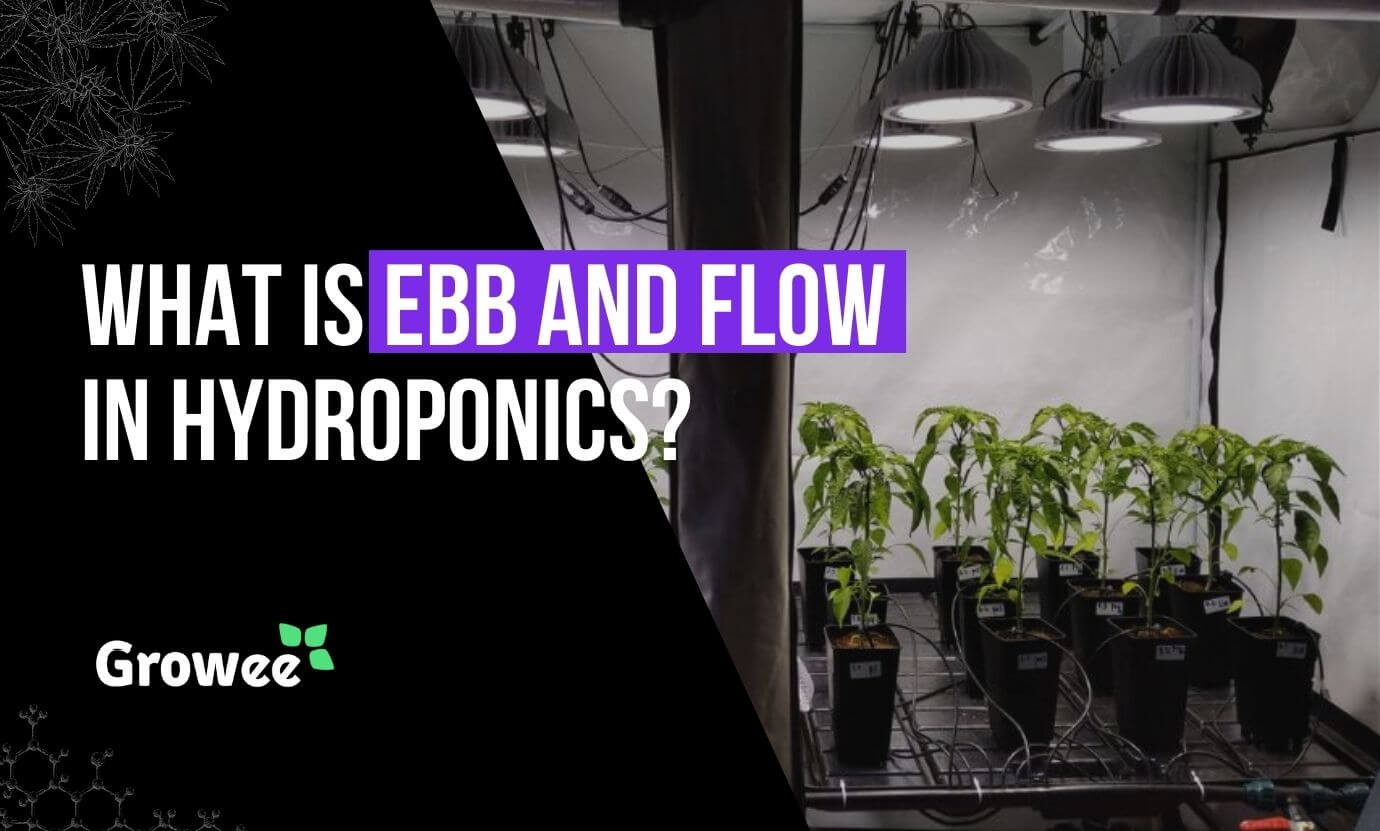
The ebb and flow hydroponic system is a method of growing plants in water, without the use of soil. It uses regular aquarium pumps to circulate water. An Ebb and Flow system is perhaps one of the most popular method for hydroponic gardening, because it requires little labor, gives excellent results and provides an ideal environment for roots to thrive.
How Does an Ebb And Flow Hydroponic System Work?
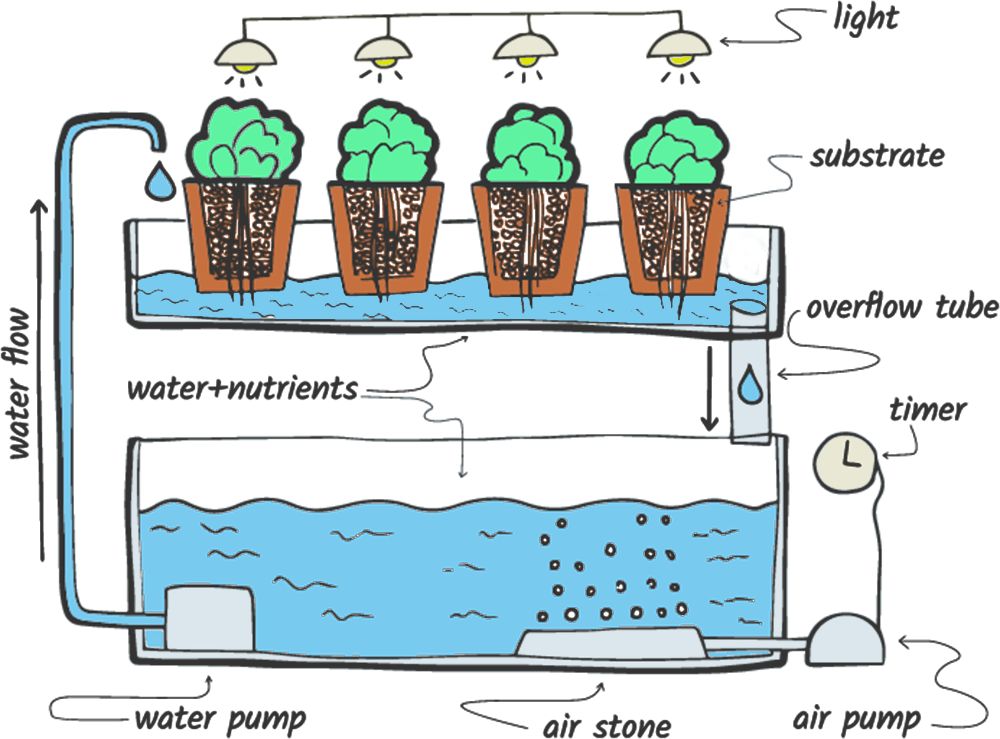
In this popular style of growing, the roots of your plants are held within a net pot or tray (usually made out of plastic) and then the water displaced from one area to another in order to supply ample oxygenation and root aeration.
In an ebb and flow hydroponic system, nutrient rich water is constantly pumped through a drain at the bottom of the growth basin. This is captured by a pump by gravity or siphon action to be recycled while recirculated over and over again. It is quite easy to maintain once set up correctly.
Materials needed for Building an Ebb and Flow Hydroponics system
- 1 x flood tray
- 1 x submersible water pump
- 1 x air pump –
- 1 x digital or analog timer which covers 24-hours
- 20ft x 1/2 Black tubing
- Overflow and inlet fittings –
- 1 x reservoir tank – opaque to deter algae growth,preferably white for summer
- Power drill
- 1/2″ and 3/4″ Drill bits for wood or plastic.
- Razer or Exacto knife
- Multibit Screwdriver To assemble the table
- Adjustable wrench or Socket set
- Plyers To push and pull tubing on and off fittings
See How Growee Can Save You Time By Automating Your Plants Feeding
Water pH – Automated pH Up and Down Control
Nutrients Mixing – Automated Nutrient Dosing with Target EC / PPM Control.
Control From Anywhere – WiFi Connection and mobile App
Different ways ebb and flow hydroponic systems can drain
Flood and drain system
Flood and drain systems are relatively simple, but they require a lot of space. They work by having two separate reservoirs: one that holds all of the water in the system and another that drains it. The water flows from the reservoir to your plants via gravity, then drains back into the reservoir when you turn off your pump again.
Dutch pot system
The Dutch pot system is a hydroponic system that uses a bucket, pot or container to hold your plant. The water drains from the bottom of the container, and then travels back up through a tube. This allows for easy draining and refilling of your reservoir, which can be important depending on how often you want to clean it.
Nutrient film technique (NFT)
The nutrient film technique (NFT) is one of the most popular methods for hydroponic gardening. It’s also one of the easiest to set up and use, which makes it a great choice for beginners.
In NFT systems, plants are usually grown in long channels or pipes that are filled with nutrient-rich water. The roots hang down into this channel and receive their nutrients from the flowing water. Because there’s no soil involved, you will have less to worry about pests or diseases like you would with some other soil based systems.
Vertical channel system
In a vertical channel system, water drains down the channels. The water is returned to the reservoir from which it originates. There are several different types of systems that use vertical channels, including flooding trays and drain-to-waste flood tables.
The advantage of using this type of system is that it allows for greater control over your nutrients than other systems do. Because you can regulate when each plant gets its nutrient solution and how much of it there is at any given time, you can better determine what effect those nutrients have on your plants’ growth rate and overall quality.
The Pros And Cons Of Ebb and Flow Hydroponic System
The pros and cons of ebb and flow hydroponic systems are that they’re very flexible, can be used to grow many different plants at once, and are efficient and space efficient. The price point is good for the average home gardener.
The cons are that you have to do some maintenance, but it’s not hard work or time consuming. You also have to make sure your reservoir holds enough water so your plant doesn’t dry out in between cycles. If you have a small system like this one though, it shouldn’t be an issue!
The Best Plants to Grow in an Ebb and Flow Hydroponic System
Ebb and flow hydroponic systems are great for growing herbs, salad greens, and other plants that thrive in an open environment with lots of light and air,although this can be done indoor too with the right equipment and setup.
Here are some of our favorites:
What are the Grow Medium Choices For Ebb and Flow Hydroponic Systems
- Clay pebbles: This is a great medium choice because it provides excellent support for plants, while also keeping them moist. Clay pebbles are also relatively inexpensive and easy to find at hardware stores or on Amazon!
- Rockwool: Rockwool has been around since the 1950s and it’s still widely used because it gives good results with minimal maintenance required. You can get rockwool in either cubes or slabs (or both) depending on what you need for your system—and it’s also relatively cheap too!
- Coco Coir: If you want an organic option that mimics soil growing conditions then coco coir may be right up your alley – although make sure to check out our article about growing organically before choosing this option!
- Perlite / Vermiculite mix: This mix is great if you have limited space inside your grow room but still want to have some sort of material underneath where roots will develop – this option prevents over-watering while helping prevent bacterial infection during root development stages due to its increased drainage properties compared with other types of mediums like rock wool which tends towards being more absorbent than vermiculite / perlite mixes.”
Tips for Ebb and Flow Hydroponic System Maintenance
Ebb and Flow systems are a particularly popular choice for beginners because they are relatively easy to set up, maintain and operate. One of the most important things you need to do with an ebb and flow system is keep tabs on your pump. The pump is responsible for moving nutrient solution from one reservoir to another, so if it starts malfunctioning—or worse, stops working at all—you’ll want to replace it immediately.
Check for leaks in hoses or around valves .Make sure there isn’t too much pressure building up against the back end of your hose (this can be caused by a faulty valve) Check that water isn’t being drained into any part of the system unnecessarily
If you notice that your plant’s leaves are beginning to yellow, then you may not be adding enough nutrients,or the PH not in the right zone creating nutrient lockout. In this case, you may have to increase the level of nutrients in the water of your system,depending on the diagnosis.
Why Choose an Ebb and Flow System?
Ebb and flow hydroponic systems are often used by growers because they’re simple to build, run, and maintain. One of the best benefits of an ebb and flow hydroponic system is that it can grow more plants in a small space. The grow bed is generally smaller than other types of soil based systems, which means you can fit more plants in the same space.A trough beneath the grow bed allows for easy collection of nutrients that don’t get absorbed by plants. Ebb and flow systems can be used indoors or outdoors and still offer the same benefit.
Finally, during a power outage this system has more buffering time ,or staying power compared to many other hydroponic systems due to the use of nutrient and water absorbing mediums .
Controlling pH and EC levels in Ebb and Flow System using Growee
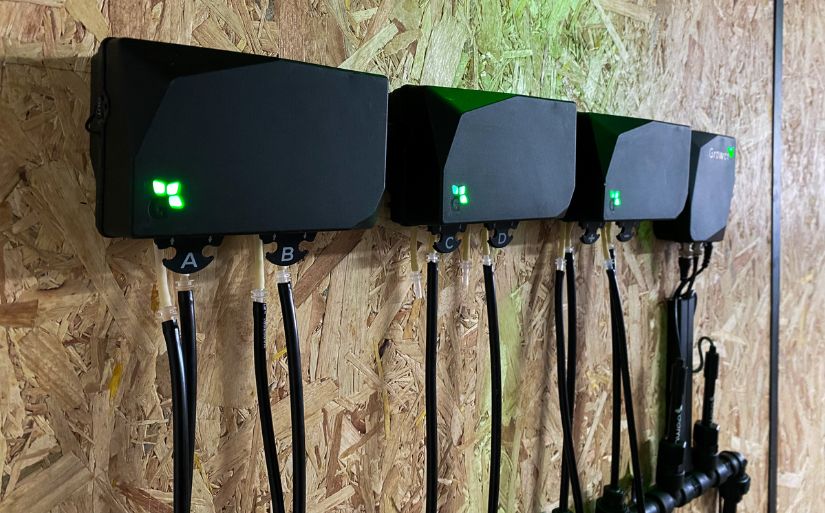
Growee is a smart pH and EC controller that helps you to control the pH and EC levels of your hydroponic systems. It is also a smart irrigation controller, water level controller and nutrient dosing controller. This means that it can be used for drip or flood systems to control pH and EC levels in Ebb & Flow systems. Growee helps you to control your pH and EC levels in an Ebb and Flow System easily. This will help improve the growth of your plants, making them healthier and more productive autonomously according to preset parameters.
FAQ
What is needed for an ebb and flow system?
The requirements for an ebb and flow system are a container, a pump (can be manual), a timer and some tubing. A container is needed to hold the water supply and house your plants. The pump will run on a timer to cycle the water between your plants – up and down throughout the day.
How do you use an Ebb and Flow Hydroponic System?
Ebb and flow systems are simple to use, requiring only regular maintenance. The main component of a Ebb and flow system is a water reservoir that is fed by a pump to one or more hydroponic trays. As the water recedes from the tray it flows through channels at the bottom which drains the nutrients back into the reservoir.
What are the Benefits of Ebb and Flow Hydroponics?
Ebb and flow hydroponics can be a great way to grow plants on a small scale. It is important to note that ebb and flow hydroponics require daily maintenance, but you can automate most of the processes for convenience. The benefit of growing in this method is that it allows you to grow plants in a small space, as well as plants in high humidity environment,and of course the buffering ability.
What are the Disadvantages of Ebb and Flow Hydroponics?
Ebb and flow hydroponics can be labor intensive, as you must refill the water, change it and harvest all on a regular schedule. Often, the ebb and flow system requires power systems to deliver this mechanical movement to an aquarium or container. Finally, if the pH balance of your ebb-and-flow hydroponic system changes, you may have trouble getting your desired crop growth.
What is the Best Grow Medium for Ebb and Flow Hydroponics?
The best grow medium for Ebb and flow hydroponics would be a hydroton medium. It’s great because it’s porous and lets the water flow easily through it,also retaining some for power outage events but it’s also lightweight so it doesn’t put too much strain on the pump.