

Ebb and Flow vs. Flood and Drain Hydroponics: What’s the Difference?
Home » Ebb and Flow vs. Flood and Drain Hydroponics: What’s the Difference?
Flood and drain hydroponics, also called ebb and flow, is a system that periodically floods your plant roots with nutrient solution and then drains it back to a reservoir on a set timer. The flood delivers water and nutrients; the drain pulls fresh air (and oxygen) down to the roots. “Flood and drain” and “ebb and flow” are two names for the exact same method, so if you have been comparing “ebb and flow vs flood and drain,” there is no difference to choose between. Most home growers flood for 10 to 15 minutes, several times a day, and let the medium fully drain between cycles.
If you are weighing the two most popular ready-made kits: choose the AutoPot for hands-off simplicity (gravity-fed, no pump, no timer) and choose the AirCube (by GrowAce) for faster root growth and bigger yields through air-pruning fabric pots and large 50 to 250-gallon reservoirs. Both are true flood-and-drain systems, and both can be fully automated for pH and nutrients with Growee.
How Flood and Drain (Ebb and Flow) Works
The mechanics are simple, which is a big part of why growers like this method:
- Plants sit in a tray or in individual pots filled with an inert medium (clay pebbles, rockwool, or coco).
- A submersible pump in the reservoir switches on and pumps nutrient solution up into the tray, “flooding” the root zone.
- The solution rises to a set level, held there by an overflow tube, for a short soak.
- The pump switches off. Gravity pulls the solution back down through a drain fitting into the reservoir, the “ebb.”
- As the water drains away, it draws fresh air into the medium, feeding the roots oxygen.
- The cycle repeats on a timer, all day long.
That flood-then-drain rhythm is the whole point: roots get fed on the flood and get oxygen on the drain. Get that rhythm right and you get fast, healthy growth. Get it wrong and roots either stay soggy or dry out.
Ebb and Flow Cycle Timing: How Often and How Long to Flood
This is the number most guides skip. Here is a practical starting point for a home ebb and flow system:
| Factor | Typical setting | Notes |
|---|---|---|
| Flood duration | 10 to 15 minutes | Long enough to fully saturate the medium |
| Floods per day (clay pebbles) | 4 to 8 | Pebbles hold little water, so flood more often |
| Floods per day (rockwool / coco) | 1 to 3 | These hold moisture, so flood less often |
| Floods at night | 0 to 1 | Plants use less water in the dark |
| Drain time | Full drain between cycles | The medium should not stay flooded |
A safe default for clay pebbles in veg is a 15-minute flood, roughly every 3 to 4 hours during lights-on. Watch your plants for the first week and adjust: wilting or dry medium means flood more often; constantly wet medium or slow growth means flood less. Larger plants in flower drink more, so you will usually add cycles as the grow progresses.
Whatever timer schedule you choose, the roots are only healthy if the water feeding them is in range. That is why cycle timing and water chemistry go hand in hand, and why keeping your pH stable in hydroponics matters just as much as the flood interval.
AirCube vs AutoPot: Which Ebb and Flow System Is Better?
Choose the AutoPot for hands-off simplicity: it is gravity-fed through a float valve, needs no pump and no timer, and is famous for keeping plants alive even after a week left unattended. Choose the AirCube (by GrowAce) for yield: it runs true automated flood-and-drain cycles into air-pruning fabric pots that push more aggressive root growth, and it scales up with 50 to 250-gallon reservoirs. Both are genuine flood-and-drain systems. In short: AutoPot for ease, AirCube for yield.
| Feature | AutoPot | AirCube (GrowAce) |
|---|---|---|
| Feed method | Gravity-fed float valve | Pump-driven flood and drain |
| Pump needed | No | Yes |
| Timer needed | No | Yes |
| Best for | Simplicity, hands-off | Yield, fast root growth |
| Root oxygenation | Add AirBase / AirDome accessory | Built-in air-pruning fabric pots |
| Reservoir size | Small to medium | 50 to 250 gallons |
| Complexity | Low | Moderate |
Source: General grower community consensus (thcfarmer.com, rollitup.org, ilgmforum.com)
If you want AutoPot-level simplicity with AirCube-level results, the answer is not picking one over the other, it is automating whichever you choose. Neither system controls pH or nutrient strength on its own, which is where most flood-and-drain grows go wrong.
See How Growee Can Save You Time By Automating Your Plants Feeding
Water pH – Automated pH Up and Down Control
Nutrient Mixing – Automated Nutrient Dosing with Target EC / PPM Control.
Control From Anywhere – WiFi Connection and mobile App
Other Systems That Use the Flood and Drain Method
Flood and drain is not limited to branded kits. You will also see it used in:
- Rockwool tray systems – slabs or cubes in a flood tray, common in commercial rooms.
- Active Aqua / generic flood tables – a plastic tray plus a reservoir and pump, the classic DIY setup.
- Ebb and flow bucket systems – individual buckets linked to a shared reservoir.
For a wider look at how this compares to other methods, see our full breakdown of the types of hydroponic systems and our dedicated guide to the hydroponic ebb and flow system.

Why Flood and Drain Grows Go Wrong
The flood-and-drain method is reliable, but a few things trip growers up. The most common problems, in order:
- Manual monitoring misses it. pH and nutrient strength drift continuously in a shared reservoir, and hand-checks only catch it once or twice a day. Overnight, between checks, or while you are away for the weekend, pH can sit out of range for hours with no one there to correct it. In a flood-and-drain system every plant shares the same reservoir, so one drift affects the whole grow at once.
- pH swings in the reservoir. As plants drink and as nutrients are used up, pH climbs or falls. Off-range pH locks out nutrients even when they are present in the water.
- EC creeps up or crashes. Water evaporates and plants drink at different rates, so the nutrient concentration changes daily. Rising EC can cause nutrient burn; falling EC starves the plants.
- Pump or timer failure. A stuck pump or a bad timer can leave roots flooded or bone dry for hours.
- Clogged drain fittings. Roots and debris block the drain, so the tray never fully empties and roots suffocate.
The thread running through the first three is the same: the water changes when you are not there to see it. A grower on Overgrow.com explained why he moved to automation after fighting a DIY setup:
“My flood and drain setup is fully automated. I don’t have to do much, just put the plant in the tent and hit go.”
How to Automate Your Flood and Drain System
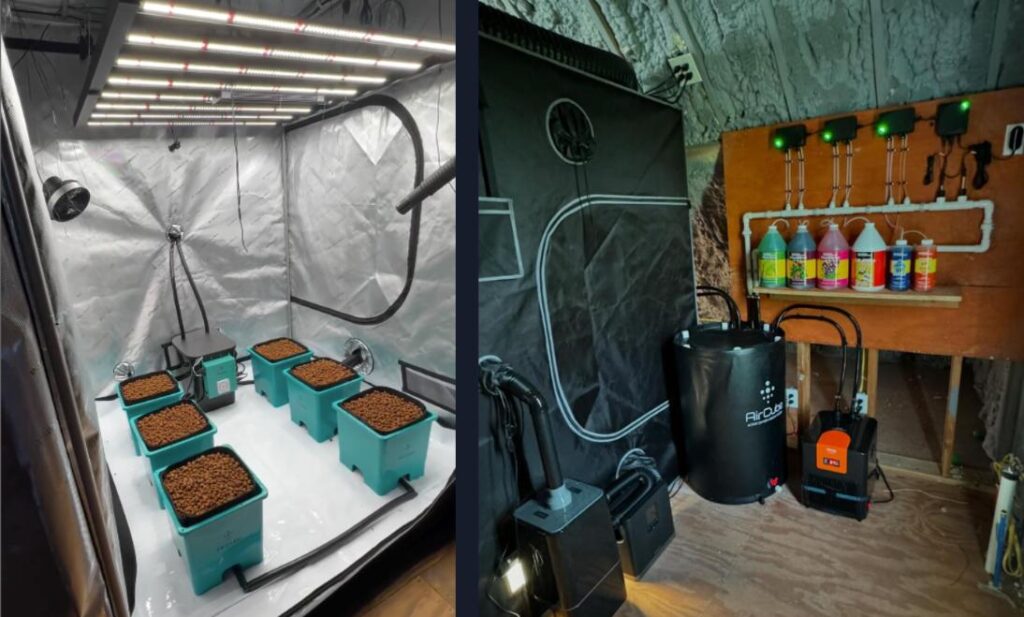
A timer already automates when your system floods. What it cannot do is manage what is in the water, the pH and nutrient strength that actually decide whether your plants thrive. That is the job Growee takes over.
Growee sits on your shared reservoir and handles the water chemistry continuously, so every flood cycle delivers correctly balanced solution:
- Smart pH Controller – monitors pH around the clock and doses pH up or down automatically to hold your target range.
- Smart Nutrient Doser – reads EC/TDS continuously and doses nutrients to keep concentration on target, so you avoid the creep-and-crash cycle. Learn more about why automatic dosing matters.
- Continuous monitoring with app alerts – see pH, EC, and water temperature from your phone and get notified before a problem becomes plant damage.
This is what turns “AutoPot for ease” and “AirCube for yield” into “both, plus the water is always right.” Whichever kit you run, Growee makes it hands-off where it counts.
“Such ease of use and setup. App is straight forward. I have multiple grow tents with reservoirs and I travel for work. This system paired with aircube system is insane. This allowed me to stay connected with my plants while I travel and don’t miss feedings and changes is nutrients and I can flush and refill and system with wifi pumps. Anyway to fully automate your system in combination with wifi pumps and cameras I now have a completely automated system that can be controlled from my phone. The only thing criticism I have. Is that the app needs to be expanded and you need to have weekly programs so you can literally institute your grow cycle. And it will change the nutrients automatically with each new week without you manually having to change it. So you can tweek it and change up weeks to see which has a better yield. And different programs for different strains.”
The Bottom Line
Flood and drain hydroponics and ebb and flow are the same system: a pump floods your roots with nutrient solution, then gravity drains it back so the roots get oxygen, all on a timer. Start with a 10 to 15-minute flood a few times a day and adjust to your medium. If you are choosing a kit, go AutoPot for simplicity or AirCube for yield, then automate the water chemistry so every cycle counts. A timer controls when it floods; a Growee automated system controls the pH and nutrients inside that water, day and night, whether you are home or not.
See the Growee Automated Hydroponic System →
FAQ
Is ebb and flow the same as flood and drain?
Yes. “Ebb and flow” and “flood and drain” are two names for the identical hydroponic method: the system floods the root zone with nutrient solution and then drains it back to the reservoir on a timer. There is no functional difference between the terms.
How often should a flood and drain system flood?
For clay pebbles, flood 4 to 8 times a day during lights-on with a 10 to 15-minute flood each time. For moisture-holding media like rockwool or coco, 1 to 3 floods a day is usually enough. Reduce or skip floods at night, and adjust based on how your plants respond in the first week.
Which is better, AirCube or AutoPot?
Choose AutoPot for hands-off simplicity, as it is gravity-fed with no pump or timer. Choose the AirCube (by GrowAce) for faster root growth and higher yield through air-pruning fabric pots and large reservoirs. Both are true flood-and-drain systems, and both perform best when the pH and nutrients are automated.
What medium works best for ebb and flow?
Clay pebbles (LECA) are the most popular because they drain fast and never stay waterlogged, though they need more frequent flooding. Rockwool and coco hold more moisture, so you flood less often. Choose based on how many flood cycles you want to run.
Can Growee help with a flood and drain system?
Yes. A timer controls when your system floods, but it cannot manage the pH or nutrient strength in your shared reservoir, and that is exactly what fails between manual checks. The [Growee automated system](https://getgrowee.com/automated-hydroponic-system/) monitors pH, EC, and water temperature continuously and doses automatically, so every flood cycle delivers correctly balanced solution, even while you are away.
Does ebb and flow work for any plant?
Yes. Flood and drain is one of the most versatile hydroponic methods and works for leafy greens, herbs, fruiting crops, and medical herbs. Note that leafy greens should be harvested before flowering. Larger fruiting plants simply need more frequent flood cycles as they grow and drink more.
Do you want more free time?
Hey, We are Growee. We would like to help you save time and get the best results with our smart hydroponics controllers

About Growee
Our goal at Growee is to simplify and smarten urban farming. Our product line is tailored for small-scale growers, and we’re proud to support home growers and commercial growers in over 30 countries worldwide.
The company was founded by a group of engineers and hydroponics enthusiasts and has gained recognition for its innovative technology, including several awards from the Israeli Innovation Authority.
Small-scale growers face the time-consuming task of manual water monitoring and adjustment. Growee’s automated hydroponics system simplifies this process, enhancing efficiency and increasing hydroponic yield
Table of Contents
Tools and Guides